Same Transaction, One Extra Step
A customer pays RM200 for a facial. Under e-Invoice, your POS also sends that transaction to LHDN's MyInvois system, which returns a UUID and QR code — and your receipt gets printed with that UUID on it. That's the whole requirement. The difference between salons is entirely in how that extra step gets done.
The Manual Way vs the Automated Way
Log into LHDN's free MyInvois web portal after every sale.
Fill in customer details, line items, and tax for that single transaction.
Submit and wait for LHDN to return a UUID and QR code.
Manually print or attach the UUID/QR to the customer's receipt.
Repeat this for every single transaction, every day.
Customer pays at checkout, same as any normal sale.
The POS submits the transaction to MyInvois automatically in the background.
The UUID and QR code print on the receipt with no extra action.
That's it — nothing left to do.
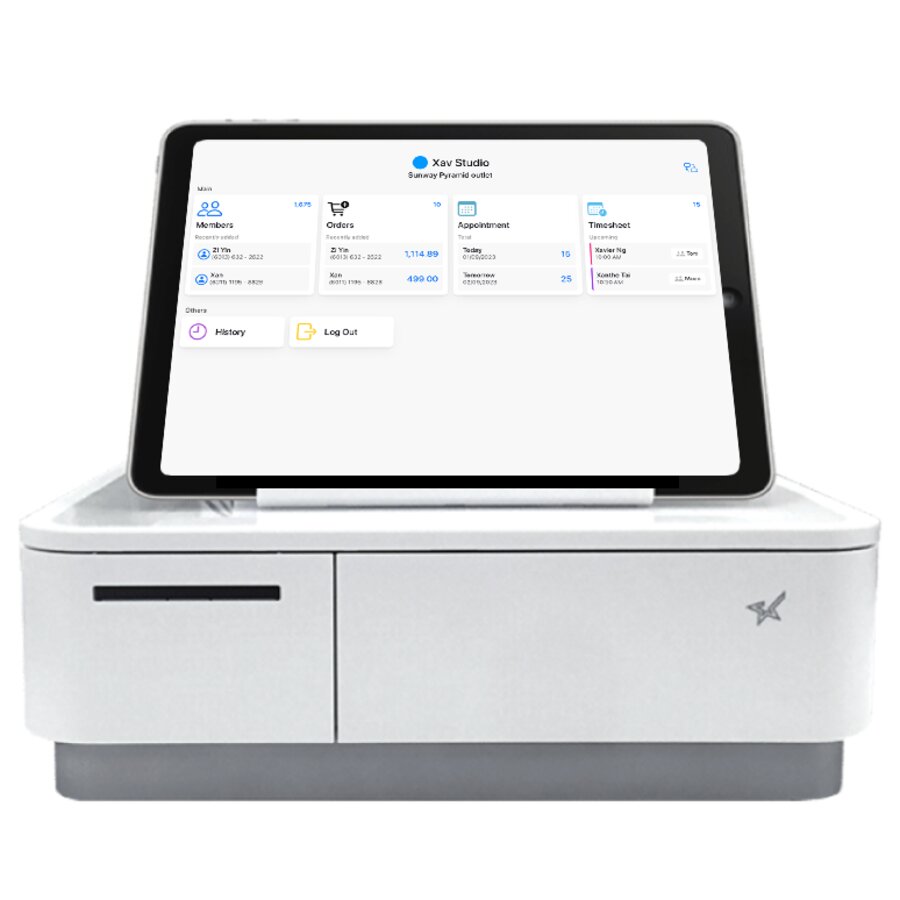
Every checkout is already the trigger point
Because e-Invoice submission happens at the same moment as checkout, a POS with direct LHDN integration doesn't add a step to your day — the order screen you're already using is where it happens.
Front-desk terminal · order & appointment viewNot Every POS Has This Built In
International booking-first tools like Fresha, Square, and Setmore weren't built for Malaysia's regulatory environment, so LHDN e-Invoice isn't a native feature — it's simply outside what they were designed to do. Locally-built systems are more likely to support it directly, but "locally-built" and "has direct API integration" aren't the same thing either — some still route through a third-party add-on rather than submitting directly. Worth asking any provider specifically whether integration is direct or via a third party, since that affects both reliability and cost.
TunaiPro submits e-Invoices directly to LHDN via the MyInvois API — no third-party middleman, no manual portal work. Starter plan is RM840/year, Standard RM1,300/year, both including e-Invoice.
This Month, Even If Your Phase Isn't Here Yet
Get your TIN sorted now. If you don't have a Tax Identification Number, applying takes 1–2 weeks through LHDN — don't be the salon scrambling the week your phase starts.
Confirm which phase applies to your business. The mandate rolls out by revenue threshold, not all at once — check LHDN's published schedule for your bracket.
Ask any POS provider directly: integration or add-on? Direct API integration means no extra manual step. A bolted-on add-on usually means more cost and more room for error.
Before You Get Started
Does my salon need to issue LHDN e-Invoices?
Yes — e-Invoice applies to every salon, spa, barbershop, and nail studio in Malaysia as the mandate rolls out by revenue threshold. The only question is when your business's phase begins, not whether it applies.
What's the difference between the manual and automated way to issue e-Invoices?
Manually, you log into LHDN's MyInvois portal and fill out a form for every single transaction — customer details, line items, tax — then get back a UUID and QR code to print. With a POS that has direct LHDN API integration, like TunaiPro, every checkout submits automatically and prints the UUID and QR code on the receipt with no extra steps.
Do international salon booking tools like Fresha or Square support LHDN e-Invoice?
Not natively — international platforms aren't built for Malaysia's regulatory environment. Locally-built tools are more likely to have direct LHDN integration, though it's worth confirming current support directly with any provider before deciding.
Stop Submitting One Invoice at a Time
7,000+ beauty businesses across Malaysia and Singapore already run on TunaiPro. Book a free, no-commitment demo.
Book My Free Demo →