GST & InvoiceNow for Salons in Singapore — What to Issue, and What to Send to IRAS
IRAS is moving every GST-registered business onto InvoiceNow between 2026 and 2031. Here's what that means for a salon or spa: when you charge GST, which document each client gets, and when your InvoiceNow date arrives.
- You only charge GST (9%) if your salon is GST-registered — compulsory once taxable turnover passes S$1 million.
- Walk-in clients who aren't GST-registered can get a receipt; GST-registered business clients need a tax invoice within 30 days.
- InvoiceNow is already required for new voluntary registrants (from 1 Apr 2026). Existing GST-registered salons join between 1 Apr 2028 and 1 Apr 2031, depending on annual supplies.
- Point-of-sale data can be sent in aggregate — you don't push every receipt to IRAS one by one.
Step 1: Does your salon charge GST at all?
GST only applies once your salon is registered. Registration is compulsory when your taxable turnover exceeded S$1 million in the past calendar year, or when you expect it to exceed S$1 million in the next 12 months. Many independent salons sit below that line.
Charge 9% GST
Issue the right document for each sale (below), file GST returns, and plan for your InvoiceNow date.
No GST to charge
No GST on your bills. If you register voluntarily, you must stay registered for at least two years — and new voluntary registrants must use InvoiceNow.
Step 2: Which document each client gets
Most salon clients are individuals, not GST-registered businesses. That makes the rules simpler than they look.
| Document | When you use it | Must include |
|---|---|---|
| Receipt | Client is not GST-registered — most walk-ins and regulars | Serially printed; keep a duplicate of every receipt |
| Simplified tax invoice | Total including GST is S$1,000 or less | Your name, address and GST reg. no., date, invoice no., description, total incl. GST, and a line such as "price payable includes GST". No customer details needed |
| Full tax invoice | Standard-rated sale to a GST-registered customer (e.g. a corporate package, or retail products sold to another business) — issue within 30 days | "Tax Invoice", your name, address and GST reg. no., date and invoice no., customer's name and address, description, GST rate, amounts excluding GST, GST amount and total including GST |
Source: IRAS, "Invoicing customers". A tax invoice isn't required for zero-rated, exempt or deemed supplies, or for non-GST-registered customers.
Step 3: Find your InvoiceNow date
Under the GST InvoiceNow Requirement, GST-registered businesses send invoice data to IRAS through InvoiceNow, Singapore's Peppol-based e-invoicing network. IRAS is phasing it in:
- 1 Nov 2025Companies that register for GST voluntarily within 6 months of incorporation
- 1 Apr 2026 In forceEvery business applying for voluntary GST registration on or after this date
- 1 Apr 2028New compulsory registrants, and existing GST-registered businesses with annual supplies of S$200,000 or less
- 1 Apr 2029Existing businesses with annual supplies of S$1 million or less
- 1 Apr 2030Existing businesses with annual supplies of S$4 million or less
- 1 Apr 2031Existing businesses with annual supplies above S$4 million
IRAS has notified businesses registered before 2026 of their dates, so check your IRAS notification for the exact one. IRAS also encourages businesses to onboard early.
What actually gets sent — and what doesn't
You submit invoice data for the transactions reported in your GST return — standard-rated, zero-rated and exempt supplies, plus the matching purchases. Reverse-charge transactions, exempt financial services and import permits are left out.
The deadline is the earlier of the date you file your GST return or its filing due date.
How the data reaches IRAS
Use an InvoiceNow-Ready Solution.
Get your Peppol ID registered in the SG Peppol Directory.
Turn on the GST InvoiceNow submission feature.
IRAS gets a copy through an IMDA-accredited Access Point Provider.
Skip step 3 and nothing reaches IRAS, even if your software can send InvoiceNow invoices.
How TunaiPro handles GST and InvoiceNow
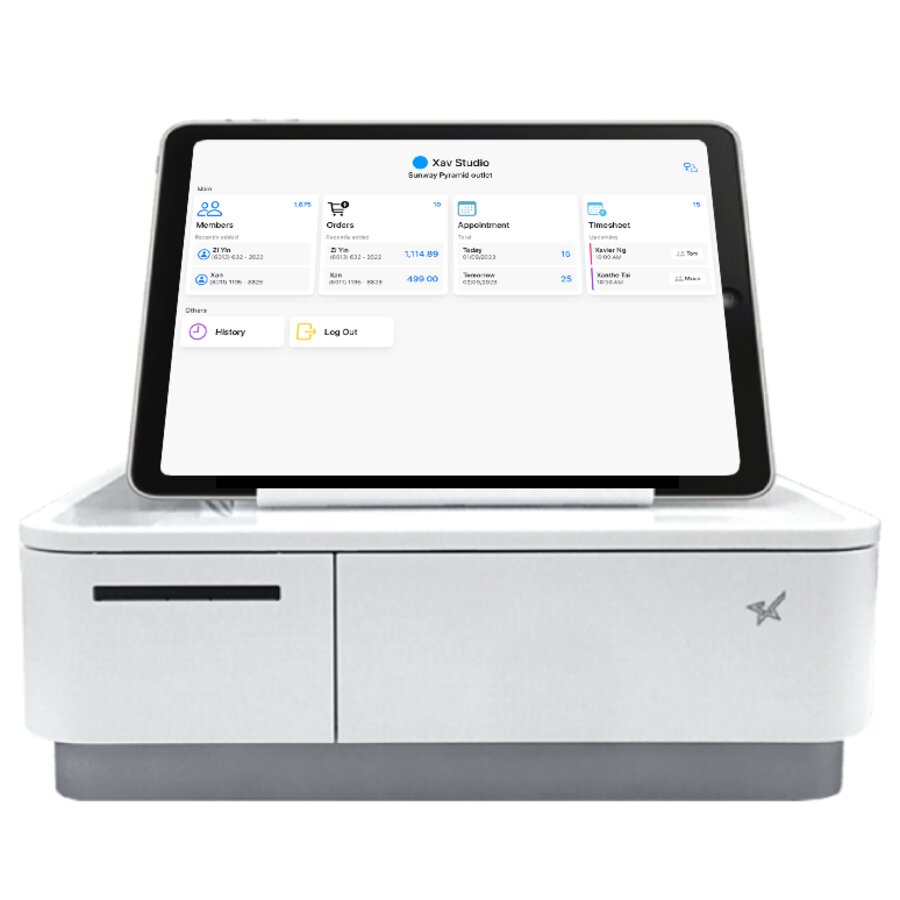
- InvoiceNow-ready for Singapore — set up with you during onboarding.
- GST-compliant tax invoices, simplified tax invoices and receipts from one checkout.
- Packages, memberships and retail sales recorded in the same system, so GST figures come from one place.
- WhatsApp AI that answers clients in English and Chinese, takes bookings and follows up — and hands over to staff when needed.
- Staff App and Customer App, on-site setup and training, and support 12 hours a day, 7 days a week.
TunaiPro Smart POS is S$1,200 a year, with a 30-day money-back guarantee.
Your InvoiceNow checklist before your date
- Confirm whether you're GST-registered, and when — that decides which phase you're in.
- Find your IRAS notification with your InvoiceNow implementation date.
- Check whether your salon POS is InvoiceNow-ready. If it isn't, plan the switch well before your date.
- List the sales that need full tax invoices — corporate packages, B2B product sales — separately from walk-in receipts.
- Get your Peppol ID registered and activate the submission feature, then send a test submission ahead of your first GST return under InvoiceNow.
Frequently asked questions
Does my salon need to charge GST in Singapore?
Only if your salon is GST-registered. Registration is compulsory once taxable turnover exceeded S$1 million in the past calendar year, or is expected to exceed S$1 million in the next 12 months. Below that, registration is voluntary — and a voluntarily registered business must stay registered for at least two years. GST-registered salons charge 9%, the rate since 1 January 2024.
When does the IRAS InvoiceNow requirement apply to my salon?
New voluntary registrants must use InvoiceNow from 1 April 2026, and new compulsory registrants from 1 April 2028. Existing GST-registered businesses are phased in by annual supplies: S$200,000 or less from 1 April 2028, S$1 million or less from 1 April 2029, S$4 million or less from 1 April 2030, and above S$4 million from 1 April 2031. IRAS has notified businesses registered before 2026 of their dates.
Do I have to send every customer receipt to IRAS under InvoiceNow?
No, not one by one. You submit invoice data for the transactions in your GST return, but IRAS allows businesses to aggregate point-of-sale data and supplies where simplified tax invoices are issued before submitting. Submission is due by the earlier of your GST return filing date or its filing due date.
Do I need to issue a tax invoice to every salon client?
No. A tax invoice is needed for standard-rated sales to GST-registered customers, within 30 days. Clients who aren't GST-registered — most walk-ins — can get a receipt instead, serially printed with a duplicate kept. If the total including GST is S$1,000 or less, a simplified tax invoice is enough and doesn't need the customer's details.
How does a salon get InvoiceNow-ready?
For off-the-shelf software, IRAS's steps are: use an InvoiceNow-Ready Solution, get a Peppol ID registered in the SG Peppol Directory, and activate the GST InvoiceNow submission feature. IRAS then receives a copy of your invoice data through IMDA-accredited Access Point Providers. Without activating the feature, nothing is transmitted to IRAS.
Does TunaiPro support IRAS InvoiceNow?
Yes. TunaiPro is InvoiceNow-ready for Singapore, alongside GST-compliant tax invoices, simplified tax invoices and receipts from the same checkout. Every Singapore plan includes on-site setup and training. TunaiPro Smart POS is S$1,200 a year.
Related guides
Sources: IRAS — GST InvoiceNow Requirement · IRAS — Committee of Supply 2026 announcement · IRAS — Invoicing customers · HitPay — GST rate and registration
General information, not tax advice. Check your own position with IRAS or your tax agent.
Get InvoiceNow-ready before your date
Book a free demo and see GST invoicing, receipts and InvoiceNow set up for a Singapore salon.
Book Free Demo via WhatsApp →On-site setup & training · Support in English & 中文 · 30-day money-back guarantee